
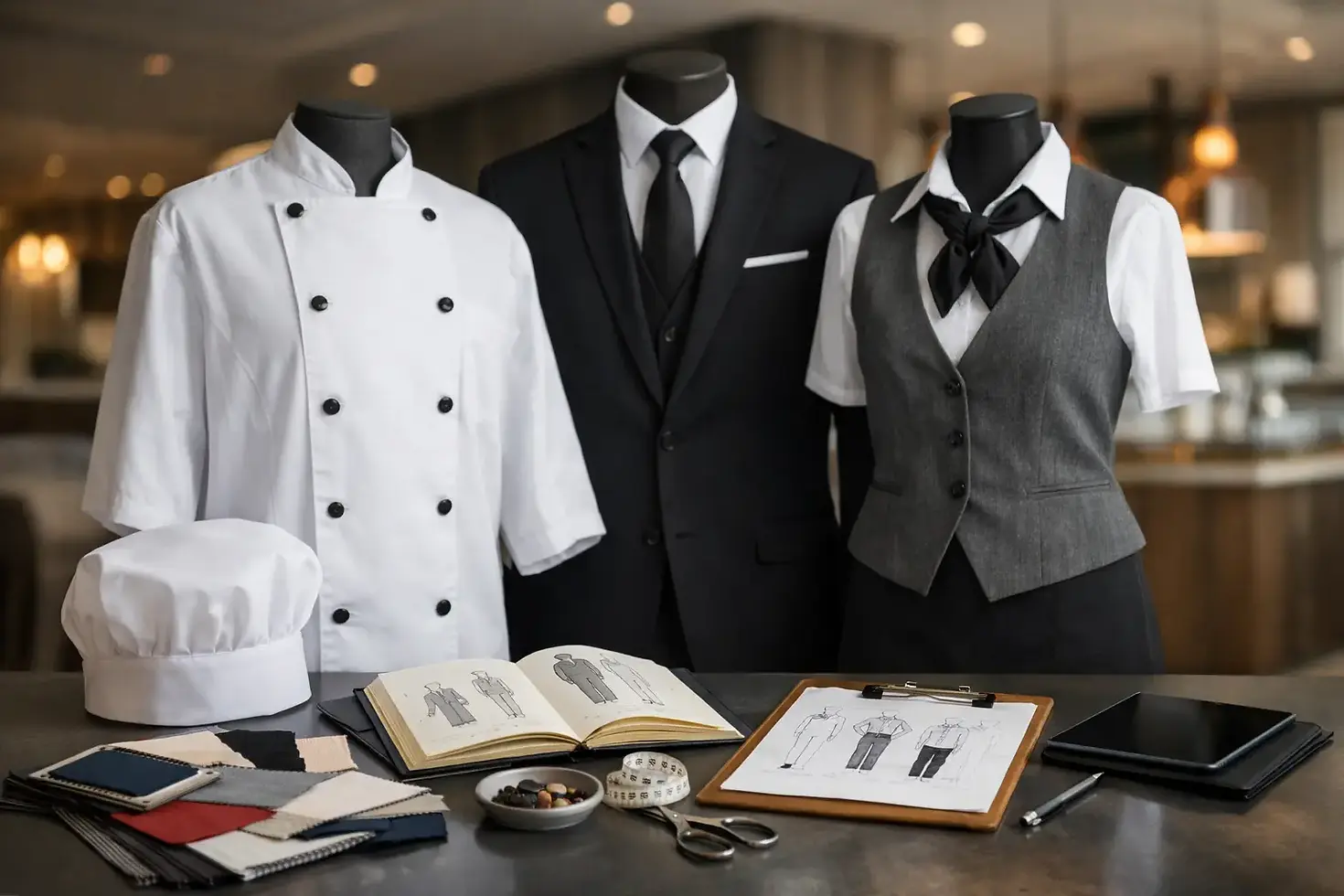
A Practical Guide to Hospitality Uniform Planning
- 𝒮𝒶𝓂𝑒𝑒𝓇

- Jul 30
- 6 min read
A guest may never ask where a uniform came from, but they notice its effect immediately. A pressed front-desk jacket signals confidence. A well-fitted server apron supports a polished dining experience. A faded, restrictive, or inconsistent uniform can undermine both. This guide to hospitality uniform planning helps hotel and restaurant operators turn that daily detail into a practical, brand-aligned operating system.
Hospitality uniforms must do more than look good for opening day. They need to support long shifts, repeated laundering, varied job roles, seasonal demand, and the expectations attached to a guest-facing brand. The strongest programs begin with clear operational decisions, not simply a catalog of garments.
Start With Roles, Tasks, and Guest Contact
Planning by department is more useful than planning by garment type. A hotel may need suits for reception, breathable shirts for bell staff, housekeeping tunics, chef coats, stewarding apparel, poolside uniforms, and branded pieces for events. Each role has a different workload, movement requirement, exposure to heat, and level of guest interaction.
Begin by mapping every employee group that will wear a uniform. For each group, identify what they do during a shift, where they work, what stains or hazards they face, and how closely guests see them. A hostess working in a climate-controlled restaurant has different needs from a valet working outdoors or a banquet team carrying service trays for hours.
This step also prevents a common mistake: using one fabric and one silhouette across every department for the sake of simplicity. A unified visual identity matters, but it should not force kitchen, housekeeping, and front-office teams into clothing that is unsuitable for their work.
Match the Uniform to the Working Environment
Heat, humidity, air conditioning, outdoor exposure, and laundry frequency should influence fabric selection early. Lightweight blends may improve comfort for outdoor and high-movement teams, while structured woven fabrics can suit reception and management roles. Kitchen garments may require heavier-duty construction and practical features such as secure closures, while housekeeping apparel should prioritize ease of movement and durability.
There is always a trade-off. A very light fabric may feel comfortable but show wear more quickly. A premium, structured fabric can elevate the appearance of guest-facing teams but may require more careful garment care. The right decision depends on the role, expected wear cycle, and replacement plan.
Build a Clear Brand System, Not Just a Logo Placement
Hospitality uniform planning should translate the brand into clothing without making every garment look identical. Color, trim, embroidery, buttons, name badges, aprons, and scarves can create a recognizable system across departments. The goal is for guests to identify the team easily while still understanding who is available to help them.
A refined hotel brand may use neutral tailored pieces with discreet embroidery. A casual dining concept might rely on branded polos, overshirts, aprons, and caps. A resort could introduce color accents that distinguish concierge, recreation, and food service teams. These choices should reflect the service environment rather than follow a trend that may feel dated after one season.
Keep logo application proportional to the garment and role. A large chest logo may work for a quick-service restaurant, promotional event, or pool operation. For formal front-office attire, subtle embroidery or a branded accessory often looks more appropriate. Confirm thread colors, logo size, placement, and artwork approval before bulk production begins.
Plan Fit for a Real Workforce
Fit is one of the most overlooked causes of uniform dissatisfaction. A uniform can use the right fabric and correct brand colors yet still fail if employees cannot move comfortably, find their size, or feel professional wearing it.
Use a size range that reflects the workforce, rather than assuming standard ratios will work for every location. Where the program includes tailored items, consider whether separate fits, adjustable elements, or made-to-measure options are needed for key guest-facing roles. Stretch panels, adjustable waists, side tabs, and appropriate garment lengths can make a meaningful difference in comfort without changing the visual standard.
Samples are essential at this stage. Ask selected team members from different roles and body types to wear sample garments while performing normal movements: reaching, bending, walking, carrying, sitting, and working in warm conditions. Their feedback should be structured and specific. A comment such as “uncomfortable” is less useful than “the sleeve restricts lifting trays” or “the apron tie loosens during service.”
A sample review also gives management a chance to check how colors look under lobby lighting, restaurant lighting, daylight, and photography. Fabric can appear very different under warm interior lights than it does in a showroom.
Set Quantity, Replacement, and Budget Rules Early
A uniform order is not only an initial purchase. It is an ongoing supply requirement. Operators need enough garments for employees to maintain a clean, professional appearance through their workweek, while allowing for laundry cycles, emergency replacements, seasonal hiring, and staff turnover.
The appropriate quantity depends on the department. Culinary, housekeeping, and food service teams often require more frequent changes than reception or management teams. It may be practical to issue multiple daily-wear pieces to high-contact roles while holding a smaller reserve stock for new hires and replacements.
Avoid choosing the lowest unit price without considering garment life. A less expensive shirt that loses shape after repeated washing can cost more over time than a better-made alternative. Evaluate cost per wear, expected replacement frequency, embroidery or printing durability, and the availability of matching stock for future orders.
For multi-site hotel groups and restaurant chains, establish approved specifications before rollout. Document fabric composition, color references, garment measurements, branding methods, and accessories. This makes repeat ordering more accurate and protects consistency when additional locations open.
Choose a Supplier That Can Manage the Full Process
Hospitality procurement becomes difficult when design, sourcing, sampling, branding, production, and delivery are handled by separate parties. Delays and quality issues often appear at the handoffs. A single manufacturing partner with in-house capabilities can reduce internal coordination and create clearer accountability.
Ask potential suppliers how they manage fabric sourcing, sample approvals, quality checks, size allocation, logo reproduction, and replenishment orders. Request realistic production timelines, not only ideal lead times. For large orders, ask how consistency will be maintained across batches and whether the supplier can support both initial rollout volumes and smaller repeat orders.
Connection Uniforms supports this process through design consultation, fabric sourcing, sampling, customization, manufacturing, and delivery under one coordinated service model. For hospitality operators, that means fewer separate vendors to manage and a more direct path from approved concept to issued garments.
Use a Controlled Approval Process
Before production, assign one decision-maker or small approval group to sign off on the final specification. This prevents late-stage changes caused by conflicting feedback from multiple departments. The approval should cover the physical sample, not just a digital design.
A practical approval file should record the final garment style, fabric, color reference, logo artwork, embroidery location, measurements, accessories, packing method, and delivery schedule. For large properties, include department-by-department quantities and size breakdowns. This documentation becomes the reference point for future reorders.
If your launch date is fixed, work backward from the date uniforms must be issued to staff. Leave time for sample review, revisions, production, branding, quality control, shipping, and size exchanges. Opening a new venue or rebranding a property is not the time to treat uniforms as a final-week purchase.
Prepare Staff for a Successful Rollout
The best uniform program can still lose impact if distribution is disorganized. Confirm employee sizes in advance, label garments by employee or department where appropriate, and schedule issue dates before a launch or changeover. Managers should explain the wear standard, care expectations, grooming requirements, and process for requesting replacements.
For larger operations, the rollout works best when it includes these five controls:
A final staff size confirmation before production is closed
Department-based packing and distribution plans
A reserve quantity for urgent exchanges and new employees
Written laundering and garment-care instructions
A defined process for collecting damaged or retired items
Care guidance should be realistic. If a garment requires special laundering, confirm that employees or the property laundry can follow those instructions consistently. A uniform designed for gentle care may not be suitable for a high-volume operation that uses commercial laundering every day.
Review Performance After the First Service Cycle
Uniform planning continues after delivery. Check in with department heads after several weeks of use, especially in high-pressure areas such as kitchens, housekeeping, banquets, and valet services. Look for recurring issues with shrinkage, fading, seam stress, comfort, pockets, sizing, or branding durability.
This review is not about changing the program at the first complaint. It is about separating isolated fit issues from patterns that affect the operation. Small adjustments to a future reorder, such as a different fabric weight, reinforced seam, modified apron length, or revised size allocation, can improve staff experience and reduce replacement costs.
A hospitality uniform should make employees feel prepared to represent the property, not burdened by what they are required to wear. Plan the program around the work, test it with the people doing that work, and choose a production partner that can deliver the same standard long after the first order is complete.



Comments