
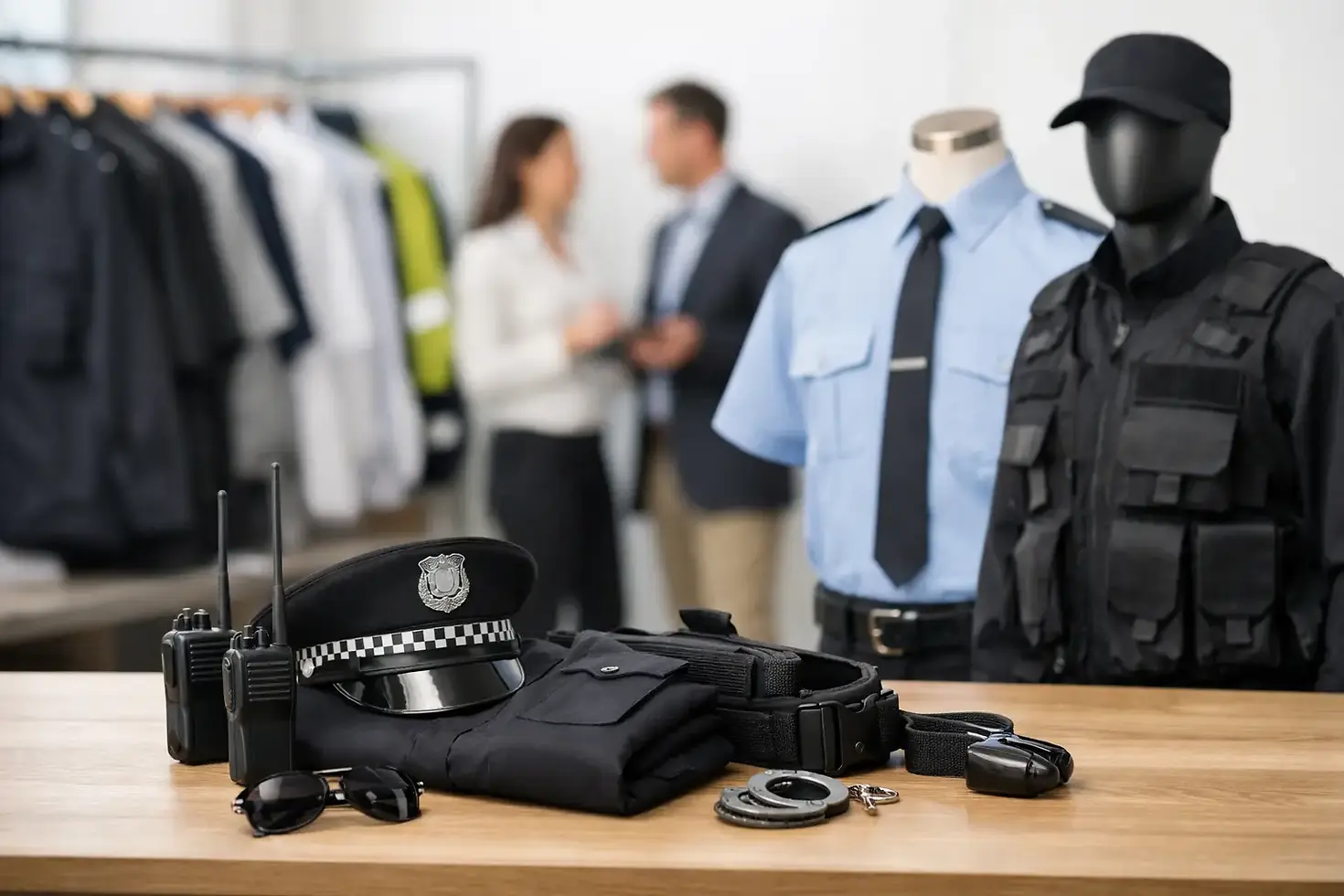
Choosing a Security Guard Uniforms Supplier

A security team is often the first point of contact at a property, facility, school, hotel, or event. Before a guard speaks, the uniform has already signaled authority, professionalism, and readiness. That is why choosing the right security guard uniforms supplier is not a small purchasing task. It affects brand image, staff comfort, operational performance, and the consistency of your service across every site.
For procurement teams and operations managers, the challenge is rarely just finding shirts and pants. The real issue is finding a supplier that can handle fit, fabric, customization, repeat orders, and delivery without creating extra work for your team. Security uniforms must hold up in demanding environments while still presenting a clean and disciplined appearance. If the supplier cannot manage those details well, the burden shifts back to your internal team.
What a security guard uniforms supplier should actually deliver
A dependable supplier should do more than quote prices. Security operations have practical requirements that vary by assignment, climate, and client expectations. A front-desk guard in a corporate tower needs a different look and fabric weight than a patrol team working outdoors or a guard stationed at a construction site.
That means the supplier should be able to guide decisions on garment design, color consistency, branding, trim details, and fabric performance. In many cases, clients also need support with embroidery, screen printing, badges, reflective applications, rank identification, and seasonal variations. A supplier that only offers stock garments may work for a small one-time order, but it usually falls short when the program needs to scale or remain consistent over time.
The strongest partners bring structure to the process. They help define the uniform package, create approved samples, record specifications, and maintain consistency for future orders. This matters when teams grow, sites change, or replacement garments are needed months later.
Why uniform quality matters in security operations
Security uniforms do not operate in a controlled showroom environment. They are worn on long shifts, in heat, dust, traffic, lobbies, warehouses, parking areas, and public-facing spaces. Fabric quality affects comfort, but it also affects appearance by the end of the day.
A poor-quality shirt may fade quickly, wrinkle too easily, or lose shape after repeated washing. Pants may wear out at stress points. Stitching may fail at pockets or seams. These are not minor cosmetic issues. They create replacement costs, undermine uniformity across the team, and can make guards look less prepared than they are.
There is also a practical balance to strike. Heavier fabrics may offer durability, but they can be uncomfortable in hot climates if the garment is not designed well. Lighter materials may improve comfort, but they need enough structure to maintain a sharp appearance. A capable supplier will explain these trade-offs instead of pushing a one-size-fits-all option.
How to evaluate a security guard uniforms supplier
The first thing to assess is production capability. Can the supplier handle both pilot orders and larger rollouts without changing quality standards? Many businesses start with one location and later expand to multiple sites. The supplier should be prepared to support that growth.
The second factor is customization control. Security uniforms often require specific shirt colors, shoulder epaulets, chest pockets, logo placement, patches, rank markings, or reflective details. If these elements are inconsistent from order to order, the entire uniform program starts to look fragmented. Buyers should ask how specifications are documented and repeated.
The third factor is sample approval. A professional supplier should offer pre-production samples so your team can review fabric, fit, color, and branding before full manufacturing begins. This reduces costly corrections later and gives operations teams confidence that the final output will match the approved standard.
Lead time is another major consideration. Fast turnaround is helpful, but reliability matters more than ambitious promises. A supplier that commits to realistic schedules and meets them consistently is far more valuable than one that overpromises and causes site-level delays.
The case for a one-stop manufacturing partner
Many uniform problems begin when too many vendors are involved. One source handles the garments, another sources fabric, another applies branding, and another manages delivery. That setup can create delays, mismatched quality, and confusion when something goes wrong.
A one-stop manufacturing partner simplifies procurement. Design consultation, fabric selection, sampling, production, customization, and delivery are handled under one roof or through one coordinated system. This gives buyers a single point of accountability and usually leads to better consistency.
It also improves repeatability. Once the approved security uniform is locked in, future orders can follow the same specifications without restarting the process from scratch. For businesses managing recurring staff onboarding, contract renewals, or multi-site operations, that efficiency matters.
This is where an experienced manufacturer like Connection Uniforms LLC can add practical value. With integrated production support, custom development capabilities, and capacity for both tailored and bulk programs, the process becomes easier to manage for procurement and operations teams alike.
Fit, function, and presentation all matter
Security uniforms must look disciplined, but they also need to work during active shifts. Guards may sit for long periods, stand at entrances, conduct patrols, move quickly in emergencies, or work outdoors for extended hours. Uniform design should support those realities.
Fit is often overlooked until complaints begin. If garments are too tight, movement is restricted. If they are too loose, the presentation suffers and safety can be affected. A supplier with a structured sizing process can reduce returns and improve comfort across the team.
Function also includes practical garment details. Pockets need to be useful. Closures should be durable. Fabrics should be suitable for the environment. Some operations require high-visibility elements, weather-appropriate outerwear, or lightweight options for hot conditions. Others need a more formal appearance for luxury properties or premium front-of-house roles. It depends on the site, the client, and the nature of the security assignment.
Consistency across locations and repeat orders
For companies operating across several sites, consistency is one of the biggest procurement concerns. A guard in one location should not appear noticeably different from a guard in another unless the role specifically requires it. Inconsistent shades, mismatched logo positions, or varying fabric types make the operation look disjointed.
That is why documentation and production control matter so much. A professional security guard uniforms supplier should maintain records of approved fabrics, trims, branding methods, measurements, and garment construction. When replacement or expansion orders come in, the same standard should be reproduced with minimal friction.
This is especially important for businesses with regular staff turnover, new site mobilizations, or seasonal demand spikes. The supplier should be able to support continuity without requiring your team to re-explain every detail each time.
Cost matters, but so does total procurement effort
Price always matters, especially for larger teams. But the cheapest unit cost is not always the best procurement decision. Lower-quality uniforms can create hidden costs through faster replacement, inconsistent presentation, employee dissatisfaction, and more administrative follow-up.
Buyers should look at total value. Does the supplier reduce internal workload? Do they support sampling, customization, and repeat ordering in a structured way? Can they produce both standard and custom items without delays? Are they responsive when adjustments are needed?
A stronger supplier relationship often saves time as much as money. When communication is clear and production is reliable, your team spends less time chasing updates, fixing errors, and coordinating multiple vendors.
Questions worth asking before you place an order
Before selecting a supplier, ask how they handle sample approvals, sizing support, branding consistency, and repeat production. Ask what fabrics they recommend for your operating environment and why. Ask how they manage urgent top-up orders and whether they can scale with your program over time.
It is also useful to ask who will manage your account after the order is placed. Good service should continue through production, delivery, and after-sales support. Uniform supply works best when the vendor acts like an operational partner, not just a quotation desk.
Choosing a security guard uniforms supplier is really about reducing risk while improving presentation, comfort, and consistency. When the right partner is in place, uniforms stop being a recurring procurement problem and start becoming a dependable part of daily operations. That frees your team to focus on staffing, service standards, and site performance instead of chasing garment issues.


Comments