
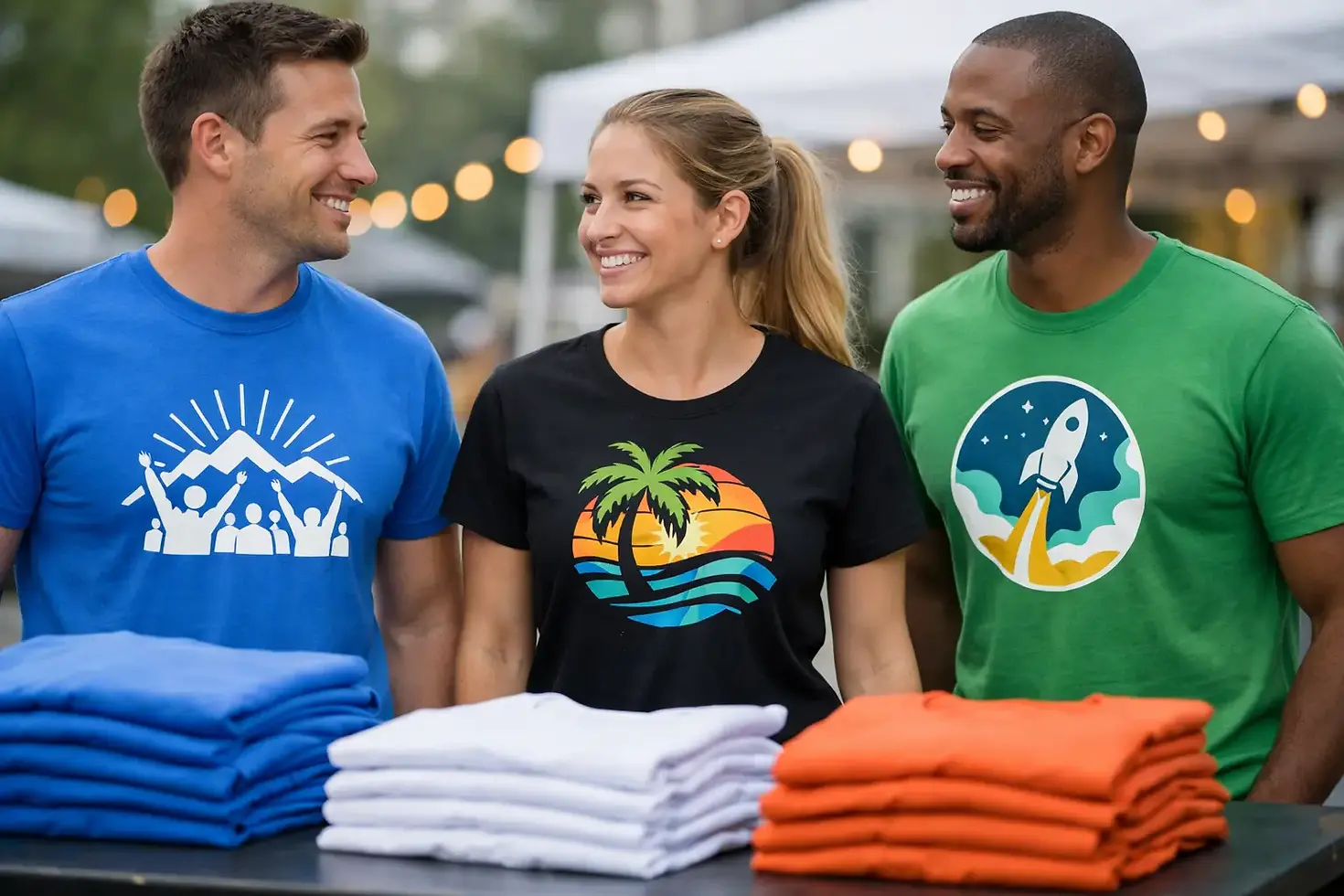
Custom Event T Shirts That Actually Work

When an event team is easy to identify, properly dressed, and comfortable for a full day on site, operations run better. That is the practical value of custom event t shirts. They are not just promotional pieces. They help guests find staff quickly, support brand visibility, and give organizers a simple way to create consistency across registration desks, floor teams, technical crews, brand ambassadors, and support staff.
For buyers managing events at scale, the challenge is rarely just design. It is getting the right mix of fabric, sizing, branding, timelines, and order accuracy without creating extra work internally. A well-managed T-shirt order reduces friction before, during, and after the event. A poorly managed one usually shows up on event day in the form of sizing issues, weak print quality, delayed deliveries, or shirts that look good in a mockup but fail in real conditions.
What custom event t shirts need to achieve
Event apparel has a job to do. In some environments, the shirt needs to make staff visible from a distance. In others, it must reflect a polished brand image for sponsors, media-facing teams, or premium guest experiences. For roadshows, exhibitions, school functions, sports days, hospitality activations, and public campaigns, the shirt often needs to do both.
That is why the right decision starts with use case, not artwork. A registration team working indoors under air conditioning may be fine in a lightweight cotton blend. An outdoor crew handling setup, logistics, and guest flow in warm weather may need a more breathable fabric with better shape retention and color stability. If the shirts are for a one-day campaign, the priorities may lean toward cost control and visual impact. If they will be reused across recurring events, durability becomes more important.
The best results come from treating event T-shirts as operational apparel with branding built in, rather than treating them as basic giveaways.
Choosing custom event t shirts by event type
Different event formats place different demands on garments. A corporate conference usually calls for clean branding, consistent sizing, and a more refined finish. A promotional activation may need brighter colors, stronger logo placement, and lightweight comfort for long hours of movement. For school or community events, easy care and broad size availability matter more because the wearer mix is wider.
Trade shows and exhibitions bring another layer. Staff are standing for long periods, representing the brand face-to-face, and often working under strong indoor lighting. In that setting, fabric drape, print sharpness, and fit consistency are more visible than many buyers expect. A shirt that twists after one wash or prints unevenly across sizes can weaken presentation fast.
There is also a difference between shirts meant for staff and shirts meant for attendees. Staff apparel should prioritize identification, comfort, and repeatability. Attendee shirts often prioritize design appeal and broad wearability after the event. Combining both goals in one product is possible, but it requires careful balancing of quality, budget, and branding.
Fabric, fit, and print are where most orders succeed or fail
Buyers often begin with logo placement, but production success usually depends on three decisions made earlier: fabric, fit, and print method.
Fabric affects comfort, appearance, and cost. Pure cotton can feel soft and familiar, but it may not hold shape as well as blended constructions in high-activity settings. Polyester blends can perform better in heat and during movement, but the feel and print compatibility need to match the event purpose. Heavier fabric can create a more premium impression, while lighter fabric may be more practical for outdoor use. There is no single best option. It depends on duration, climate, activity level, and brand positioning.
Fit matters just as much. Event teams are rarely made up of one uniform body type, especially across hospitality groups, schools, corporate teams, or promotional staffing agencies. Unisex sizing may simplify ordering, but it does not always deliver the best outcome in wearability or presentation. In some cases, offering separate men’s and women’s cuts improves comfort and appearance. In others, a carefully graded unisex range is the most efficient route. The key is planning size runs with real wearers in mind rather than estimating too tightly.
Print method should match volume, artwork, and expected wear. Screen printing is often efficient for larger runs with bold graphics. Heat transfer can work well for names, numbering, or smaller variable details. Embroidery is less common for standard event tees but can suit premium promotional use depending on design placement and fabric. What matters is not choosing the most expensive decoration, but choosing the one that will hold up, reproduce brand colors accurately, and stay consistent across the order.
Why buyers should ask about the full production process
A T-shirt order looks simple until revisions start. Sizes change. Pantone references need checking. Event dates move forward. Quantities increase after sponsor approvals. This is why supplier capability matters as much as garment selection.
A full-service production partner can manage design support, fabric sourcing, sampling, customization, manufacturing, and delivery in one process. That structure helps reduce the handoff problems that happen when multiple vendors are involved. It also gives buyers better control over approvals, quality checks, and timeline adjustments.
For event orders, sampling is especially valuable. A pre-production sample helps confirm print scale, fabric feel, fit, and final appearance before bulk manufacturing begins. This step can prevent expensive corrections later, particularly for branded events where visual consistency is non-negotiable.
It is also worth asking how stock, cutting, and sewing are managed. Capacity becomes critical when deadlines are tight or quantities grow suddenly. Connection Uniforms supports this need through an integrated manufacturing model that gives clients one point of coordination from concept to delivery, which is often the difference between a smooth rollout and last-minute scrambling.
Brand consistency matters more than most teams expect
At events, attendees judge organization quickly. Small visual inconsistencies stand out fast when teams are customer-facing. If shirt shades vary between batches, logos are placed unevenly, or sizing is inconsistent across staff groups, the event can feel less controlled even when logistics are running well.
That is why custom event t shirts should be specified with clear production standards. Color matching, approved artwork files, exact print positions, garment measurements, and packaging instructions all help maintain a professional result. This becomes even more important for multi-city activations, annual conferences, school group events, and hotel or restaurant brands running repeated promotions across locations.
Consistency is not only about appearance. It also affects reordering. When specifications are documented properly, future orders are easier to repeat without restarting the process from zero. That saves time for procurement teams and reduces uncertainty for operations managers working against event calendars.
Budget matters, but so does total ordering efficiency
Cost is always part of the decision, and rightly so. But the cheapest unit price is not always the most efficient purchase. If a low-cost order leads to high spoilage, reprints, inconsistent fit, or rushed replacement shipments, the real cost rises quickly.
A better approach is to look at total order value. That includes garment performance, print durability, service responsiveness, and how much internal time the supplier saves your team. For recurring event programs, it may be more cost-effective to standardize a shirt specification that works across multiple uses rather than redesigning every order from the beginning.
There are also smart ways to balance budget without compromising presentation. You might simplify artwork colors, choose a more efficient decoration method, or split apparel types by role so only customer-facing teams receive premium finishes. These decisions can improve spend control while keeping the event image strong.
A smoother ordering process starts with better planning
The strongest event apparel projects usually begin with a short, clear brief. The buyer defines who will wear the shirts, where they will be used, how long they need to last, what branding is required, and when delivery is needed. That information helps the supplier recommend the right fabric, fit structure, decoration method, and production schedule from the start.
It also helps to build in time for sample review and final quantity confirmation. Last-minute ordering is common in events, but the more compressed the timeline, the fewer choices remain for fabric, customization, and size flexibility. Early planning gives buyers more control and usually produces a better result.
If the order is large or recurring, ask for size breakdown guidance, packaging by department or location, and clear reorder records. These details may seem secondary when the artwork is being approved, but they make distribution far easier once the shipment arrives.
Custom event apparel works best when it supports the event, not when it becomes another issue to manage. The right T-shirt should help your team look organized, feel comfortable, and represent the brand with consistency from the first guest interaction to the final breakdown. When the production process is handled properly, that outcome is entirely achievable.


Comments